
Pay by Mobile Casino Not on GamStop
 Available in GB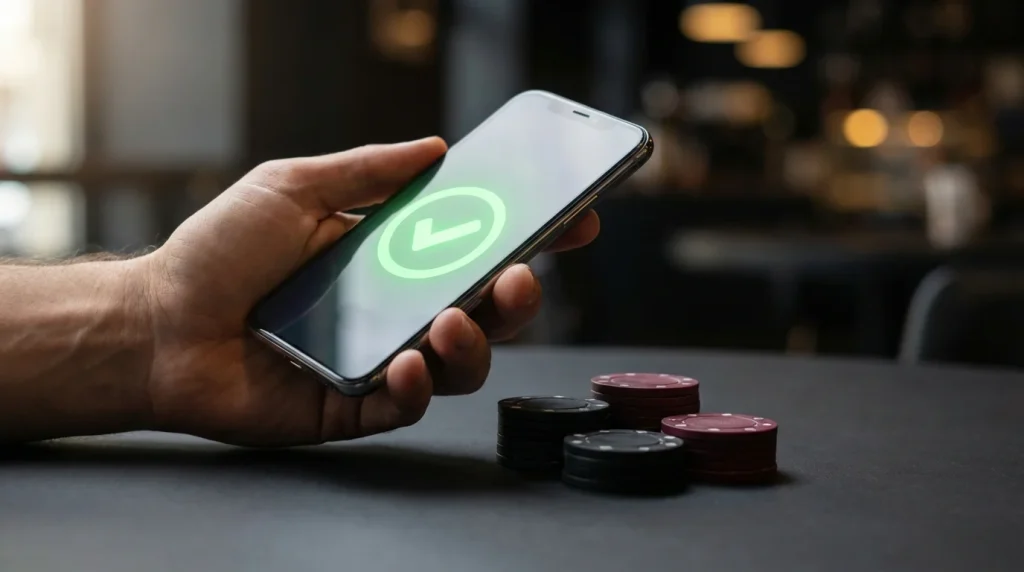
Phone Bill Deposits at Non-GamStop Casinos
Pay-by-mobile is the fastest deposit method — and the one with the tightest limits. The premise is simple: you fund your casino account by charging the amount to your mobile phone bill, the same way you might buy an app or a subscription. No card details entered, no e-wallet login, no blockchain transaction to confirm. A few taps, an SMS verification, and the money appears in your balance within seconds.
At UKGC-regulated casinos, pay-by-mobile has been available for years through services like Boku and Payforit. The mechanism works identically at non-GamStop platforms that support it, though the availability is less consistent. Not every offshore casino offers phone bill deposits — the payment method requires specific integrations with mobile network operators, and smaller platforms may not have the commercial relationships in place. Those that do support it tend to advertise the feature prominently, because it appeals to a specific type of player: someone who wants instant deposits, values simplicity, and is comfortable with the limitations that come attached.
Those limitations are not trivial. Daily deposit caps — typically £30, sometimes less — exist because the mobile operator is effectively extending you short-term credit. You’re not spending money you have; you’re adding a charge to a bill you’ll pay at month’s end, or deducting from prepaid credit you’ve already loaded. That structural difference changes the risk profile in ways that matter. It also means pay-by-mobile is purely a deposit method — you cannot withdraw winnings back to your phone bill. Every penny you win must be extracted through a different channel: a bank transfer, an e-wallet, or another method the casino supports.
For UK players at non-GamStop sites, pay-by-mobile occupies a narrow but genuine niche. It’s useful for topping up with small amounts quickly, particularly if your bank blocks gambling transactions or if you don’t want to share card details with an offshore operator. It’s less useful — and potentially problematic — as a primary funding method, because the disconnect between depositing and withdrawing creates friction that more unified payment options avoid entirely.
Best casino sites in the UK
- Revery PlayBonus: 100% up to€1,000+ 100 FS · Payout speed: 1-3 business days
- NightWinBonus: £900 + 400 free spins · Payout speed: 1-3 business days
- WinBeastBonus: €5000 + 500 FS + €650 Freebet · Payout speed: 1-3 business days
- SpinFormulaBonus: 550% Up To £15,000 + 550 FS · Payout speed: 1-3 business days
- BritsinoBonus: Welcome Package – Get your £2,200 + 2,000 FS · Payout speed: 1-3 business days
- DieselwinBonus: Welcome Pack 250% up to £4000 + 200 FS · Payout speed: 1-3 business days
- x3betBonus: Welcome Pack 100% Up to £1.000 + 200 Free Spins · Payout speed: 1-3 business days
- SlotoSportBonus: 500% up to £ 10 200+ 777 FS · Payout speed: 1-3 business days
How Pay-by-Mobile Actually Works
The technical process behind a pay-by-mobile deposit involves three parties: you, the casino, and an intermediary payment service that interfaces with your mobile network operator. Understanding this chain matters, because each link introduces its own rules, fees, and limitations.
When you select pay-by-mobile at the casino cashier and enter your phone number, the casino sends a deposit request to the payment processor — most commonly Boku, though Payforit (the UK carrier billing framework backed by all major mobile networks) handled transactions historically in the UK market. The processor forwards the request to your mobile operator — EE, Vodafone, Three, O2, or whichever network you’re on — which sends an SMS to your handset asking you to confirm the charge. You reply or tap to authorise, and the operator confirms back up the chain. The casino credits your account.
The entire sequence typically completes in under 60 seconds. No banking credentials are transmitted to the casino at any point, which is the method’s primary security advantage. The casino knows your phone number and the deposit amount; it doesn’t know your bank account, card number, or any other financial data. For players wary of sharing sensitive details with an offshore operator, that separation is meaningful.
On a contract phone, the deposit amount is added to your next monthly bill. On pay-as-you-go, it’s deducted from your existing credit balance. Both scenarios impose daily caps. The standard maximum via Boku is £30 per transaction, though individual operators and casinos may set lower limits. Some networks also impose monthly ceilings — typically £240 to £300 — to prevent bill shock. These caps are set by the mobile operators, not by the casinos, and they cannot be negotiated or increased regardless of your account status.
One mechanical detail that catches players off guard: pay-by-mobile deposits may incur a surcharge at certain offshore casinos. While most UKGC-licensed sites absorb the processing fee, some non-GamStop platforms pass it through to the player — typically 10% to 15% of the deposit amount. On a £30 deposit, a 15% surcharge means £4.50 goes to processing costs and only £25.50 reaches your casino balance. Always check the cashier page for fee disclosures before confirming a mobile deposit. If the information isn’t clearly displayed, deposit a small test amount first and compare what arrives in your account against what was charged to your phone.
The withdrawal issue is non-negotiable: no pay-by-mobile service supports reverse transactions. When you want to cash out, you’ll need an alternative method already set up on your account. This typically means providing bank details or registering an e-wallet — the same steps you might have been trying to avoid by choosing phone bill deposits in the first place. Some casinos require that your first withdrawal goes through the same method as your deposit, which creates a deadlock with pay-by-mobile. Verify the withdrawal requirements at any non-GamStop casino before depositing via phone bill, or you may find your winnings stranded behind a verification process you weren’t expecting.
The Trade-Off: Speed Against Everything Else
Pay-by-mobile gives you one thing exceptionally well — instant deposits with minimal friction — and compromises on nearly everything else. Whether that trade-off makes sense depends entirely on how you use it and what you expect from it.
The speed advantage is real and unmatched. No other deposit method gets funds into your casino account faster. Bank transfers take hours or days. E-wallet deposits require a funded account and a login step. Even crypto, which is fast by financial standards, involves confirmation times and wallet management. A phone bill deposit skips all of that. For players who want to top up quickly during a session — adding £10 or £20 on impulse — the immediacy is genuinely convenient.
The problem is that “convenient impulse deposits” and “responsible bankroll management” are nearly opposite concepts. The ease of pay-by-mobile removes one of the natural friction points that slow down gambling spend: the time and effort required to move money. When adding funds takes 15 seconds and no visible deduction from your bank account, the psychological barrier between deciding to deposit and actually doing it effectively vanishes. The charge appears on your phone bill weeks later, which creates a temporal disconnect between spending and paying that credit card researchers have studied extensively — and the findings are consistent. Delayed payment mechanisms increase spending.
The daily caps partially mitigate this. A £30 limit means you can’t lose hundreds in a single session through phone bill deposits alone. But the caps don’t prevent you from reaching that limit every day for a month, which produces a £900 phone bill addition that may come as a shock if you weren’t tracking the running total. Mobile operators don’t send gambling-specific spending alerts, and most non-GamStop casinos won’t flag the pattern either.
The one-directional nature of the payment method creates another practical friction. Suppose you deposit £30, play for an hour, and end up with £150 in your balance. To withdraw, you now need to set up a bank transfer or e-wallet, which involves identity verification at most offshore casinos. That process can take 24 to 72 hours, during which your £150 sits in your casino account — available to play with, tempting to re-wager. The gap between easy deposits and delayed withdrawals is structurally advantageous for the casino, and it’s a feature of pay-by-mobile that doesn’t exist with more balanced payment methods.
None of this makes pay-by-mobile inherently irresponsible. It’s a tool, and tools are neutral. But it’s a tool designed for speed and simplicity, not for financial control or transparency. If you use it with that understanding — small, deliberate top-ups within a pre-set monthly budget, with a withdrawal method already configured before your first deposit — it works fine. If you use it reactively, topping up after a losing streak because it’s the path of least resistance, the design works against you.
Alternatives Worth Considering
If the appeal of pay-by-mobile is avoiding card details at offshore casinos, several alternatives achieve the same goal without the deposit caps and withdrawal limitations.
E-wallets — Skrill, Neteller, and Payz are the most common at non-GamStop sites — act as a buffer between your bank and the casino. You fund the wallet from your bank account, then deposit from the wallet to the casino. The casino never sees your banking details. Withdrawals return to the same wallet, keeping the cycle contained. Deposit limits are significantly higher than phone bill methods, typically starting at £10 and reaching thousands depending on your wallet tier. Processing times are near-instant for deposits and usually within 24 hours for withdrawals at well-run platforms.
Cryptocurrency offers even stronger separation. A Bitcoin or USDT deposit reveals nothing about your identity or banking details to the casino — just a wallet address. Deposits confirm in minutes, withdrawals are often processed within the hour, and there are no intermediary charges beyond network fees. The setup requires a crypto wallet and some familiarity with buying and transferring tokens, which is a higher barrier to entry than typing in a phone number, but the ongoing experience is smoother and more flexible once established.
Prepaid cards — Paysafecard is the most widely accepted — provide another option. You purchase a voucher with a fixed value (available online or at retail outlets), then enter the voucher code at the casino cashier. No bank or card details involved. The limitation mirrors pay-by-mobile in one respect: withdrawals aren’t supported, so you’ll still need a secondary method for cashing out. But the spending is pre-committed — you buy a £50 voucher and that’s the maximum you can deposit — which provides a built-in budgeting mechanism that phone bill deposits lack.
Each of these methods solves the core problem that draws players to pay-by-mobile — protecting financial details from offshore operators — while offering better flexibility, higher limits, or both. The question isn’t which method is best in the abstract; it’s which one fits your deposit frequency, your withdrawal expectations, and your comfort level with the setup process involved.
Convenience Has a Cost — Make Sure You Know It
Pay-by-mobile deposits at non-GamStop casinos are a convenience feature, not a financial strategy. They solve a specific, narrow problem — getting small amounts of money into your account quickly without sharing bank details — and they solve it well. Everything else about the method is a compromise: low caps, no withdrawals, potential surcharges, and a spending psychology that works in the casino’s favour.
If you choose to use phone bill deposits, treat them the way you’d treat any credit facility: with a clear budget, a firm limit, and an awareness of how much you’ve spent that month. Your mobile operator won’t send you a gambling summary. Most offshore casinos won’t either. Tracking is your responsibility, and the delayed billing cycle makes it easy to lose count if you’re not actively monitoring.
Set up your withdrawal method before you make your first deposit. This eliminates the friction gap between easy deposits and delayed cashouts, and it means your winnings aren’t sitting in limbo while you navigate a verification process you weren’t prepared for. If the casino requires ID verification for withdrawals — and most non-GamStop platforms do — complete that step during registration, not after your first win.
The broader point applies to pay-by-mobile more than to any other payment method in the offshore gambling space: the easier it is to spend money, the more important it is to have controls in place before you start. Speed and simplicity are not substitutes for discipline. They’re the reason you need it.