
Non-GamStop Gambling UK — Casinos, Slots & Betting 2026
Licences, safety, payments, and legal status — everything UK players need to know about offshore gambling sites.

Best Non GamStop Casino UK 2026
Loading...
What UK Gambling Outside GamStop Actually Means
GamStop blocks access to every casino, sportsbook, and bingo room that holds a UK Gambling Commission licence. It does not, however, reach the hundreds of gambling sites licensed outside British jurisdiction — and that distinction is the single most important thing most guides on this topic either gloss over or ignore entirely. If you have registered with GamStop, your self-exclusion applies only within the UKGC ecosystem. Operators regulated by Curaçao, Malta, Gibraltar, or any other offshore authority are under no obligation to check the GamStop database, and in practice, almost none of them do.
The scale of this parallel market is not trivial. By the end of 2025, 562,000 people had registered with GamStop — roughly one percent of the UK adult population. That figure has been climbing year on year, with registrations up 19% in the first half of 2025 alone and monthly sign-ups breaking the 10,000 mark for the first time in April of that year. Each of those registrations represents a person who can no longer access any UKGC-licensed platform for at least six months, and often for five years or more. A growing proportion of those individuals, whether out of regret, renewed confidence, or simply the desire to gamble on different terms, look to offshore alternatives.
562,000 registered users — By December 2025, GamStop had recorded over half a million total registrations since its 2018 launch. Approximately 75% of users report they no longer gamble online after self-excluding, but the remaining quarter represents a substantial pool of players actively seeking non-UKGC options.
The reasons people turn

to gambling sites not on GamStop are more varied than the typical affiliate review suggests. Some registered with GamStop impulsively and now face years of exclusion from platforms they used casually. Others are drawn by features that UKGC regulation has restricted or banned outright — bonus-buy slots, unlimited autoplay, higher stake limits, and the absence of affordability checks that require players to hand over bank statements. A third group is motivated by cryptocurrency: offshore casinos accept Bitcoin and Ethereum deposits that UKGC sites cannot process under current rules.
What ties all these players together is a need for clear, honest information. The offshore gambling market serving UK players is not a lawless wilderness, but it is not a regulated high street either. Licensing standards vary enormously between jurisdictions. Dispute resolution mechanisms range from robust to non-existent. Bonus terms can be generous or predatory, and telling the difference requires reading the fine print rather than trusting a badge in the footer. This guide walks you through the legal framework, the licensing landscape, the payment mechanics, and the safety checks that separate a credible offshore operator from one that will make withdrawing your winnings an exercise in frustration.
How GamStop Works — And Where It Stops
GamStop is the UK's national online self-exclusion scheme. It launched in April 2018 and is funded by UKGC-licensed operators as a condition of their licences. Registration is free, takes about five minutes, and is available to anyone over 18 with a UK address. Once you sign up, every operator on the UKGC register is required to block your account and prevent you from opening a new one. The system matches your personal details — name, date of birth, email, address, and postcode — against operator databases. In theory, it is seamless. In practice, there are edges worth understanding.
When you register, you choose one of three exclusion periods: six months, one year, or five years. Since December 2024, a fourth option has been available — five years with automatic renewal — which effectively creates a permanent block unless you actively opt out. Take-up of this option has climbed quickly; by December 2025, more than half of all users choosing a minimum five-year exclusion selected auto-renewal. The shorter periods are increasingly popular among younger users. Among 16-to-24-year-olds, who now make up nearly a third of new registrations, roughly four in ten chose the six-month option in the second half of 2025.
Here is what GamStop does not tell you upfront: once your exclusion is active, you cannot cancel it early. There is no appeal process, no cooling-off reversal, no customer service override. If you registered for five years in a moment of frustration after a bad session, you are locked out for five years. The scheme recently rebranded to "Gamstop Online" and refreshed its website, but the core mechanic remains the same — exclusion is absolute within its jurisdiction.
GamStop activates within 24 hours of registration, but individual operators update their exclusion lists on different schedules. Some sync daily, others at longer intervals. During that gap, it is technically possible to access an account that should already be blocked — an inconsistency that GamStop has acknowledged but not fully resolved.
The critical limitation is jurisdictional. GamStop's reach is absolute — but only within the borders of UKGC licensing. An operator holding a Curaçao, MGA, or Gibraltar licence has no contractual or legal relationship with GamStop and is not required to integrate its database. A UK player who self-excludes via GamStop can, within minutes, create an account at an offshore casino and deposit without any friction from the self-exclusion system.
This is neither a loophole nor a design flaw. GamStop was built to cover the regulated UK market, and it does that effectively. But for the player at home, the practical effect is simple: GamStop is a gate that only covers one road, and the other roads are open. Whether that represents a problem or a choice depends on how well the player understands what they are walking into.
GamStop also does not cover land-based gambling. Betting shops, casinos, and bingo halls operate under a separate scheme — now rebranded as Gamstop Betting Shops — covering approximately 6,000 premises. The two systems are not linked, so online self-exclusion does not extend to physical venues.
The Offshore Casino Landscape for UK Players
Not all offshore casinos are shady backroom operations — but not all of them are trustworthy, either. The market serving UK players outside GamStop is dominated by four licensing jurisdictions, each with a distinct regulatory philosophy, enforcement track record, and level of player protection. Understanding these differences is not academic; it directly affects whether you can resolve a dispute, how quickly you receive a withdrawal, and whether the games you are playing have been independently audited.
The offshore landscape has shifted considerably over the past two years. Regulatory overhauls in Curaçao, tighter enforcement from Malta, and the emergence of newer jurisdictions like Anjouan have redrawn the map. What was once a fairly uniform collection of loosely supervised operators is becoming more stratified — with a widening gap between platforms that take compliance seriously and those that treat a licence as a marketing badge.
Curaçao: New Rules After the 2024 Overhaul
For over two decades, Curaçao was the jurisdiction of choice for operators who wanted a licence without much oversight. The old system allowed four master licence holders to issue sub-licences to hundreds of operators, collecting fees while providing minimal supervision. That era ended when Curaçao's parliament approved the National Ordinance on Games of Chance, known by its Dutch abbreviation LOK, on 17 December 2024 — with the law officially coming into effect on 24 December 2024. The legislation replaced the sub-licence model entirely, placing all regulatory authority under a single body: the Curaçao Gaming Authority.
Under the LOK framework, every operator must now hold a direct B2C licence from the CGA. The old hybrid model where a single entity could act as both operator and platform supplier is gone — B2C and B2B licences are strictly separated. Annual fees for a B2C licence sit at approximately EUR 47,000, a significant increase from the sub-licence fees that some operators paid under the old regime. Operators who held provisional licences under the transitional framework were required to fully comply with the new rules by mid-2025, and since July 2025, no company registered in Curaçao can legally operate games of chance without a CGA-issued licence.
The practical effect for UK players is mixed. The reform introduces mandatory Alternative Dispute Resolution, AML protocols, and responsible gambling requirements that were absent before. But the transition has been rocky — licence processing delays and political controversy around the approval process have created uncertainty, and some smaller operators have migrated to alternative jurisdictions rather than shoulder the higher compliance costs.
Malta Gaming Authority: The Gold Standard Offshore
The Malta Gaming Authority occupies a unique position in the offshore landscape. It is technically an EU regulator, yet many of its licensees serve markets — including the UK — where they do not hold a local licence. MGA-licensed casinos are generally regarded as the safest offshore option for UK players, and for good reason. The MGA mandates segregated player funds, certified random number generators, published RTPs, and a formal ADR process through bodies like eCOGRA or the Malta Gaming Authority's own Player Support Unit.
MGA licence holders are also subject to regular compliance audits and face meaningful penalties for violations, including licence suspension and public enforcement actions. The authority publishes a searchable register of all active licensees, making it straightforward for players to verify whether a casino's claimed licence is genuine. For UK players accustomed to UKGC standards, an MGA-licensed site will feel the most familiar — though it still lacks the direct recourse mechanisms available under British regulation.

Curaçao (CGA)
Overhauled in late 2024 under the LOK framework. Direct B2C licences only. Mandatory ADR and AML now in force. Transition still ongoing for some operators. Annual fee approximately EUR 47,000.
Malta (MGA)
EU-based regulator with the strictest offshore standards. Segregated player funds, published RTPs, formal complaint process. Higher barrier to entry for operators. Searchable public licence register.
Gibraltar
British Overseas Territory with a mature regulatory framework. Historically home to major brands like Bet365 and 888. Tight licensing requirements but smaller operator pool. Strong dispute resolution.
Anjouan
Part of the Comoros archipelago. Growing in popularity, especially among crypto-focused operators. Introduced an updated Recognition Certificate scheme in 2025 for B2B operations. Lower costs, but limited international recognition and weaker enforcement track record.
Gibraltar, as a British Overseas Territory, has a mature framework, but most of its licensees also hold UKGC licences and participate in GamStop — making it less relevant for players seeking non-GamStop alternatives. Anjouan is the newest jurisdiction you are likely to encounter. It has grown rapidly among crypto-first operators, with lower licensing costs and faster processing. The trade-off is limited recognition among payment processors and a weaker enforcement track record. An Anjouan licence is not a red flag by itself, but it warrants additional due diligence.
You've seen the mechanics — now let's talk about what they mean for you.
Is It Legal? UK Law and Offshore Gambling
This is the question that comes up more than any other, and the answer is more straightforward than most people expect. UK gambling law targets operators, not players. The Gambling Act 2005, which remains the primary legislation governing gambling in Great Britain, creates criminal offences for providing gambling facilities without a licence — not for using them. Section 33 of the Act makes it illegal to offer gambling services to people in Britain without UKGC authorisation. The Gambling (Licensing and Advertising) Act 2014 extended this requirement to all remote operators serving UK customers, regardless of where they are based. But neither piece of legislation criminalises the act of placing a bet at an offshore site.
To put it bluntly: if you are a UK resident who creates an account at a Curaçao-licensed casino and deposits money, you are not breaking the law. The operator, technically, is — by offering services to British consumers without a UKGC licence. But enforcement against offshore operators is limited. The UKGC can block payment processing, issue public warnings, and request ISP-level blocks, but it cannot revoke a licence it never issued.
This does not mean there are no consequences for the player. By gambling outside the UKGC framework, you forfeit every protection that British regulation provides. You cannot escalate a complaint to a UKGC-approved Alternative Dispute Resolution body. You cannot rely on the requirement that operators segregate player funds. If an offshore casino refuses to pay your winnings, your practical options are limited to the dispute mechanisms offered by the casino's licensing jurisdiction — which may be slow, inaccessible, or effectively toothless, depending on where the licence was issued.
Tax-free winnings — Gambling winnings in the UK are not subject to income tax or capital gains tax. This applies regardless of whether the winnings come from a UKGC-licensed site or an offshore operator. The tax obligation falls on the operator, not the player, under HMRC's General Betting Duty, Pool Betting Duty, and Remote Gaming Duty framework. This has been the case since 2001. If you are earning income from gambling as a professional — a vanishingly small category — different rules may apply, and you should consult a tax adviser.

The 2023 Gambling White Paper prompted a wave of regulatory changes through 2025 and into 2026. The most visible are the online slot stake limits — £5 maximum per spin for adults aged 25 and over, £2 for those aged 18 to 24 — introduced in April 2025. A mandatory statutory levy on operators replaced voluntary funding in October 2025, and enhanced affordability checks have been phased in throughout the year. All of these measures apply exclusively to UKGC-licensed operators. Offshore platforms remain unaffected.
The irony is hard to miss. Every regulatory tightening on the domestic market makes offshore alternatives marginally more attractive to certain players. The government has acknowledged this tension but has prioritised domestic protection over restricting offshore access. For now, the legal position remains clear: playing at a non-GamStop casino from the UK is not illegal. It is, however, unprotected.
UKGC vs Offshore: What You Gain and What You Lose
Switching from UKGC to offshore is not an upgrade — it is a trade. Every freedom you gain on one side comes with a protection you lose on the other, and pretending otherwise is the fastest way to end up on the wrong side of that exchange. The comparison below is not about declaring a winner. It is about making the trade-offs visible so you can decide which set of compromises you are actually comfortable with.
Bonuses
Offshore: larger packages, higher match percentages, more free spins. UKGC: lower amounts but clearer terms and stricter advertising rules.
Stake Limits
Offshore: none. UKGC: £5 max on slots for over-25s, £2 for 18–24, since April 2025.
KYC Process
Offshore: ranges from full KYC to near-anonymous crypto play. UKGC: mandatory ID, address, and source-of-funds checks.
Payout Speed
Offshore: crypto withdrawals often within hours. UKGC: typically 1–5 business days, with possible affordability holds.
Bonuses: Bigger Offshore, Safer Domestic
The headline numbers at offshore casinos look impressive. Welcome packages of 200%, 300%, even 500% match bonuses are common, often bundled with hundreds of free spins. UKGC-licensed sites, by comparison, have been scaling back bonus sizes for years, partly because tighter advertising standards and clearer wagering disclosure requirements make inflated offers harder to justify. But size is not value. A 200% bonus with a 45x wagering requirement and a £5,000 maximum withdrawal cap is worth less, in real terms, than a 100% bonus with 20x wagering and no cap. Offshore bonus terms tend to be longer, more complex, and harder to locate on the site. The glossy welcome banner rarely tells the full story.
UKGC operators are required to present bonus terms in a standardised format, including key information such as wagering requirements, game contribution percentages, maximum bet during wagering, and expiry dates. Offshore sites have no such obligation, and the quality of their terms pages varies wildly. Some MGA-licensed casinos adopt UKGC-style disclosure voluntarily. Others bury critical conditions in sub-clauses that would require a contract lawyer to parse. Before claiming any offshore bonus, read the full terms document — not the summary, not the banner, the actual terms.
Stake Limits and Affordability Checks
This is where the gap is widest and the emotions run hottest. Since April 2025, UKGC-licensed online slots have been capped at £5 per spin for players aged 25 and over, with a £2 limit for those between 18 and 24. These limits were introduced as part of the Gambling White Paper reforms and are enforced through a statutory instrument amending the Gambling Act 2005's operating licence conditions. Offshore sites impose no such restriction — you can stake £50, £100, or more per spin on the same game that would be capped at £5 domestically.
Affordability checks are the other major friction point. The UKGC has introduced tiered financial assessments: light-touch checks triggered when a player's net deposits reach £150 within a rolling 30-day period, with enhanced due diligence at higher thresholds. These checks use publicly available data in the first instance but can escalate to requests for bank statements, payslips, or proof of income. The system is designed to protect vulnerable players, and the data suggests it does — but it also creates frustration for players who view their gambling budget as a private matter. Offshore casinos do not conduct affordability assessments. Whether that represents freedom or risk depends on the player.
Beyond bonuses and limits, the comparison extends to game availability (offshore offers bonus-buy slots and unrestricted autoplay), withdrawal speed (crypto payouts can clear in under an hour versus one to five business days domestically), and dispute resolution (UKGC players have access to approved ADR bodies; offshore players rely on the regulator's own process). None of these differences has a universally correct answer. The right choice depends on what you value most — and what you can afford to lose if something goes wrong.
Games You Can Access Outside GamStop
The game library is where offshore casinos flex hardest. Not because they necessarily offer more titles — many UKGC sites carry thousands of games — but because they offer titles with features that British regulation has either restricted or removed entirely. For a certain type of player, especially slot enthusiasts, the difference is not marginal. It is the entire reason for going offshore.
Slots dominate the traffic at non-GamStop casinos, and the reasons are specific. The UKGC has progressively tightened the rules around online slot play: autoplay has been effectively banned, spin speed has been slowed to a mandatory 2.5-second minimum interval, and the bonus-buy feature — which allows players to pay a lump sum, typically 80 to 100 times the base stake, to skip directly into the free spins round — is prohibited. Offshore casinos retain all of these features. A game like Sweet Bonanza or Gates of Olympus plays identically in terms of its core maths, but the experience is markedly different when you can trigger a bonus round on demand rather than waiting for it to land organically over dozens or hundreds of spins.
Providers who build games with these features in mind are well represented on offshore platforms. Pragmatic Play is the market leader in sheer volume, supplying some of the most-played slots in the offshore space. Nolimit City and Hacksaw Gaming cater to high-volatility players with titles that can deliver extreme payouts — and extreme dry spells. Push Gaming, Endorphina, Betsoft, and BGaming fill out the catalogue with a mix of volatility profiles and mechanics.
Beyond slots, offshore casinos typically offer a full suite of live dealer games powered by Evolution and Pragmatic Play Live. Table game selection includes blackjack, roulette, baccarat, and various poker variants, generally with wider bet ranges than their UKGC counterparts. Crash games — Aviator, Spaceman, JetX — have grown rapidly and are a staple at most offshore sites. Slingo, game shows, and virtual sports round out the catalogue. Poker rooms are less common on offshore casinos than on dedicated poker platforms, but several sites offer sit-and-go tournaments and cash tables.
Bonus buy and autoplay — features banned under UKGC regulation — are the primary draw for slot players at non-GamStop casinos. If these features do not matter to you, the game libraries on domestic and offshore platforms are broadly comparable.
One caveat worth noting: not every game at an offshore casino comes from a certified provider. Some sites carry titles from unlicensed studios or offer modified versions of popular games with altered RTPs. Checking the provider name before playing is a basic precaution — if the game does not appear in the official catalogue of a recognised studio, treat it with suspicion. Legitimate providers publish their game lists, and any title worth playing can be verified in seconds.
Payment Methods at Non-GamStop Casinos
Your payment method shapes your entire offshore experience — from deposit speed to withdrawal ceiling. The options available at non-GamStop casinos are broader than what you will find at UKGC sites, and some of them carry implications that go beyond mere convenience. Choosing the right method is not just about getting money in and out; it affects anonymity, fee structure, currency risk, and even which bonuses you qualify for.
The payment landscape at offshore casinos breaks down into four main categories: cryptocurrency, e-wallets, debit cards, and bank transfers. Credit cards deserve a separate mention — they are banned for gambling deposits at UKGC-licensed sites under rules introduced in April 2020, but most offshore operators accept them without restriction. This is a meaningful difference for players who prefer credit card rewards or cash-flow flexibility, though the risks of gambling on credit need no elaboration.
Crypto Deposits: Speed, Privacy, and Volatility
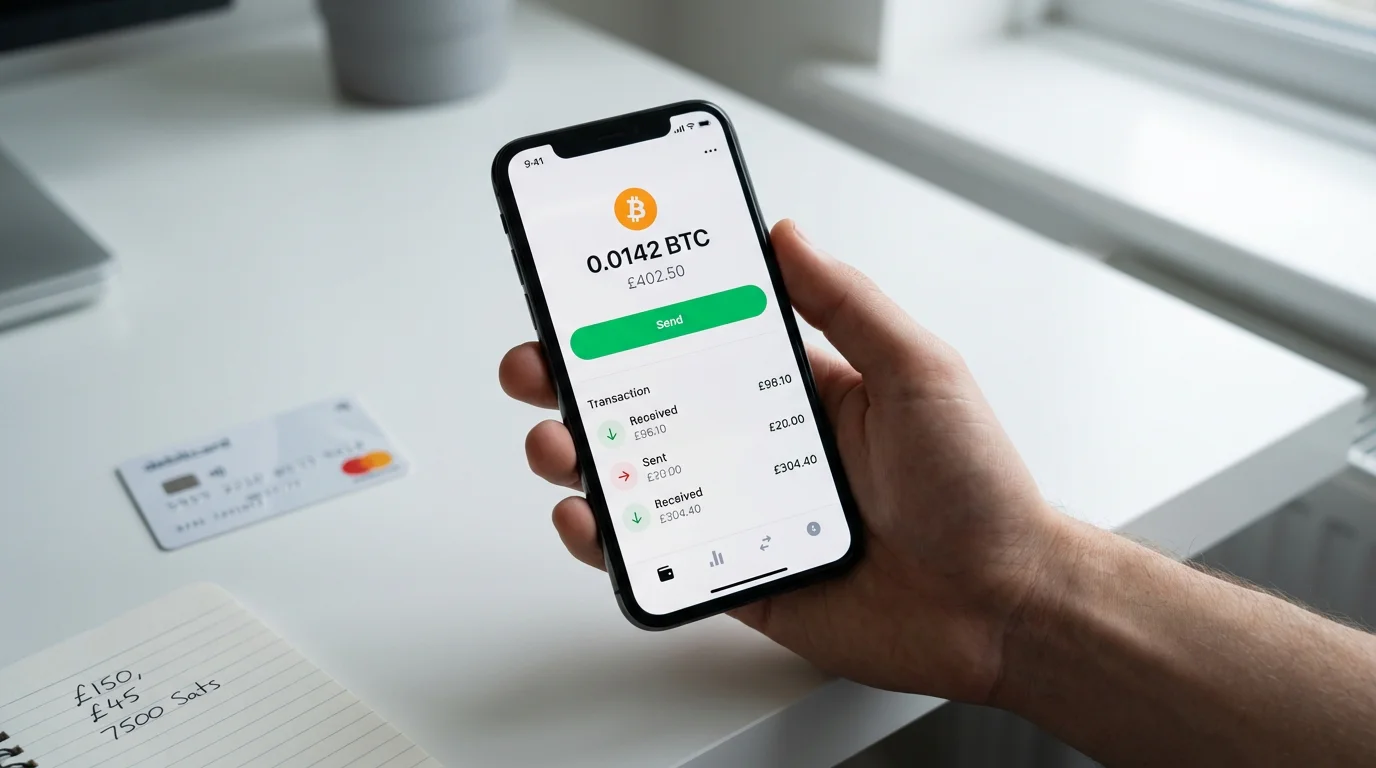
Cryptocurrency is the default payment method at a significant and growing share of offshore casinos. Bitcoin remains the most widely accepted, followed by Ethereum, Litecoin, Tether (USDT), and a rotating cast of altcoins that varies by platform. The advantages are real: deposits typically confirm within minutes, withdrawals bypass traditional banking delays entirely, and the level of personal information required is minimal — some crypto-first casinos operate with little or no KYC, though this is becoming less common as regulators like the CGA introduce AML requirements.
The trade-off is volatility. If you deposit 0.01 BTC when Bitcoin is trading at £40,000, your account is credited with £400. If the price drops 10% while you are playing, the value of your balance — assuming it is denominated in BTC — drops with it. Some casinos denominate balances in fiat to avoid this problem; others keep everything in crypto. Clarifying this before you deposit saves headaches later. Transaction fees on the blockchain also fluctuate; Bitcoin network fees can spike during periods of congestion, eating into smaller deposits.
E-Wallets and Traditional Options
Skrill, Neteller, and Payz (formerly ecoPayz) are the three e-wallets you will encounter most frequently at offshore casinos. All three support GBP, process deposits instantly, and handle withdrawals within 24 to 48 hours in most cases. They also offer a degree of separation between your bank account and the casino — your bank statement shows a payment to Skrill, not to an offshore gambling site, which matters to some players. The downside is fees: both Skrill and Neteller charge for currency conversion and may levy withdrawal fees depending on your account tier.
Debit card deposits via Visa and Mastercard are accepted at most offshore casinos, though approval rates can be inconsistent — some UK banks block transactions to offshore gambling merchants without clear notification. Bank transfers handle larger amounts but are the slowest option, with deposits taking one to three business days and withdrawals up to five.
Worked example: £100 BTC deposit with a 150% bonus
Deposit: £100 in Bitcoin (approximately 0.0025 BTC at £40,000/BTC)
Bonus credited: £150 (150% match)
Total playable balance: £250
Wagering requirement: 30x bonus amount = 30 x £150 = £4,500 in total wagers
At an average slot RTP of 96.5%, expected loss during wagering: £4,500 x 3.5% = £157.50
Expected balance after wagering: £250 - £157.50 = £92.50
Potential withdrawal (if T&C allow): £92.50 minus any withdrawal fee
Reality check: the bonus effectively funds extended play, not guaranteed profit. The maths works in the casino's favour by design.
Whichever method you choose, check three things before depositing: minimum and maximum transaction limits, processing times for withdrawals specifically (deposit speed is rarely the problem), and whether the casino charges fees on top of the payment provider's own charges. A casino that advertises "instant withdrawals" but imposes a 48-hour pending period before processing is not delivering instant anything.
How to Verify a Non-GamStop Casino Is Legitimate
A licence number on the footer means nothing until you have checked the regulator's own database. This is the single most important safety step, and it is also the one that most players skip. Every legitimate licensing authority maintains a public register of active licensees — the MGA publishes a searchable list on its website, the CGA operates a licence management portal with dynamic verification seals, and Gibraltar's regulatory body lists authorised operators publicly. If the licence number on a casino's website does not appear in the corresponding regulator's database, or if the domain listed on the licence does not match the site you are visiting, stop there. Do not deposit.
Beyond licence verification, a legitimate offshore casino will display several indicators of operational credibility. An SSL certificate (visible as the padlock icon in your browser's address bar) encrypts data between your device and the casino's servers — its absence is disqualifying. Published RTP data, either on the site or accessible through the game provider's documentation, indicates that the games have not been tampered with. An identifiable corporate entity with a registered address, rather than a shell company with a PO box, suggests at minimum that someone is willing to attach their name to the operation.
RNG audits from recognised testing houses — eCOGRA, iTech Labs, GLI, BMM Testlabs — provide additional confidence that game outcomes are genuinely random. Not every offshore casino commissions these audits (some rely on provider-level certification), but a casino that prominently displays verified third-party seals is making a meaningful statement about transparency.
The terms and conditions document is the most underread and most important page on the site. Look specifically for: withdrawal caps (some casinos limit weekly or monthly withdrawals to amounts that would take months to cash out a large win), bonus forfeiture clauses, account closure terms, and the dispute resolution process. If the T&C page is a copy-paste job with placeholder text or broken links, that tells you everything about the operator's standards.
Do
- Check the licence number against the regulator's public database before creating an account.
- Read the full withdrawal terms, including limits, pending periods, and verification requirements.
- Test customer support with a specific question before depositing — response time and quality reveal operational standards.
- Search player forums and review aggregators for patterns of complaints, especially around delayed or refused withdrawals.
- Start with a small deposit to test the full cycle: deposit, play, request withdrawal, receive funds.
Don't
- Trust footer badges alone — logos can be copied, and a "Curaçao Licensed" banner means nothing without a verifiable licence number.
- Deposit a large sum on your first visit. Build trust incrementally.
- Ignore negative forum patterns. A single complaint may be noise; ten complaints about the same issue is a signal.
- Assume that a flashy website with a large game library equals legitimacy. Design is cheap; compliance is not.
- Skip the terms and conditions. If you would not sign a contract without reading it, do not deposit money without doing the same.
A final note on red flags. Casinos that require additional deposits to "unlock" a withdrawal, change their terms after you have met wagering requirements, or demand identity documents only when you try to cash out — these are not cautious operators. They are following a script designed to prevent payouts. If a casino's behaviour changes the moment you request a withdrawal, leave.
Responsible Gambling Without GamStop
GamStop is one tool in a larger kit — and the most effective protection combines several layers. If you are gambling at offshore casinos, you have opted out of the UK's most comprehensive self-exclusion system, which means the responsibility for managing your play shifts almost entirely onto you. That is not a moral judgment; it is a structural fact. Offshore operators may offer some responsible gambling features, but enforcement and consistency are not guaranteed.
Many offshore casinos provide deposit limits, session timers, cool-off periods, and site-level self-exclusion. The quality of these tools varies. Some operators implement them rigorously, with limits that are hard-coded and cannot be increased without a mandatory waiting period. Others offer them as a checkbox compliance exercise — technically present but easy to bypass or override. Before depositing at any offshore site, navigate to the responsible gambling section and test the tools. Set a deposit limit. Try to change it immediately. If the site lets you raise your limit with no delay or cooling-off period, that tells you how seriously it takes player protection.
External tools fill the gap where operator-level controls fall short. GamBan is a paid service that installs blocking software on your devices, preventing access to thousands of gambling websites — including offshore sites that GamStop cannot reach. It costs £24.99 per year and works across Windows, Mac, iOS, and Android. BetBlocker is a free alternative developed by a registered charity, offering similar device-level blocking with no subscription fee. Neither tool is perfect — a determined user can find workarounds — but both add a meaningful friction layer that buys time for second thoughts.
Banking-level blocks offer another layer. Most major UK banks — Barclays, Lloyds, HSBC, NatWest, Monzo, Starling — allow customers to block gambling transactions on their debit cards through mobile apps. The block prevents deposits to any gambling merchant, including offshore operators, though it does not cover cryptocurrency purchases or e-wallet top-ups used for gambling.

Your Safety Stack — Coverage Example
Layer 1: GamBan (device-level blocking) — blocks access to gambling sites on all your devices
Layer 2: Bank card gambling block — prevents direct debit card deposits to gambling merchants
Layer 3: Operator deposit limit — caps daily/weekly deposits at the casino level
Combined coverage: device access blocked + payment method blocked + operator-level limit in place. Three independent barriers, each covering a different vector. No single point of failure.
If you or someone you know is experiencing gambling-related harm, support is available. GamCare operates the National Gambling Helpline at 0808 8020 133, available 24 hours a day, 7 days a week. GambleAware provides information, resources, and referrals at begambleaware.org. Both services are free, confidential, and staffed by trained advisers. The fact that you are gambling offshore does not disqualify you from accessing these resources — they exist for anyone affected by gambling harm, regardless of where they play.
Understanding House Edge and RTP at Offshore Sites
RTP is not a promise — it is a statistical average across millions of spins, and the short-term variance can be brutal. If you are going to play at offshore casinos, understanding how Return to Player and house edge actually work is not optional. It is the difference between treating gambling as entertainment with a known cost and treating it as a vending machine that occasionally dispenses money.
RTP stands for Return to Player and is expressed as a percentage. A slot with an RTP of 96.5% is programmed to return £96.50 for every £100 wagered over its statistical lifetime — millions, sometimes billions, of spins. The house edge is the inverse: 100% minus RTP. A 96.5% RTP slot has a 3.5% house edge, and that margin is the casino's mathematical advantage built into every game. No strategy, betting pattern, or lucky streak changes the underlying maths.
The critical distinction is between theoretical and realised RTP. The theoretical figure is what the game delivers over an infinite number of spins. Your actual experience over a single session can deviate wildly. A player who spins a 96.5% RTP slot a hundred times might see returns of 40% or 180% — both outcomes are entirely consistent with the game's design. Variance is what creates the gap between the average and what actually lands in your account.
At offshore casinos, RTP transparency varies by operator and provider. Established studios like Pragmatic Play, Nolimit City, and Evolution publish RTP figures for each game, and reputable casinos display this information in the game's info panel. However, some providers offer operators a choice of RTP settings for the same title — a practice that is legal but rarely disclosed. A game that runs at 96.5% on one platform might run at 94.5% on another, with the lower-RTP version generating more revenue for the casino at the player's expense. If an offshore casino does not display RTP data or makes it difficult to find, treat that as a data point about transparency, not a minor oversight.
RTP in practice: £1,000 wagered at 96.5% RTP
Total wagered: £1,000
Theoretical return: £1,000 x 96.5% = £965
House edge: £1,000 x 3.5% = £35
That £35 is the expected cost of play. Think of it as the price of entertainment, comparable to spending £35 on a cinema outing or a meal. The difference is that in gambling, variance means you might walk away with £1,500 — or with nothing.
Over 10,000 spins at £1 each, the actual return will begin to converge toward 96.5%. Over 100 spins, anything can happen. This is why bankroll management matters more than game selection for most players.
UKGC-licensed sites are required to display RTP information for every game. Offshore sites are not. The gap matters most with lesser-known providers whose games may not have public RTP documentation. If you cannot verify the RTP of a game through the provider's website or an independent database, consider whether you want to play it at all. The difference between a 96% and a 92% RTP slot is not academic — it doubles the house edge and doubles the expected cost of every hour you spend playing.
A practical approach: stick to games from providers who publish their RTP data, verify the RTP at your chosen casino matches the provider's listed figure, and think of the house edge as a known expense. The casino will always win in aggregate. Your goal is to stay within a budget, enjoy the experience, and walk away when the entertainment value fades.
Common Questions About UK Gambling Not on GamStop
Is it legal to gamble at non-GamStop casinos in the UK?
Yes. UK gambling law, primarily the Gambling Act 2005 and the Gambling (Licensing and Advertising) Act 2014, targets operators rather than players. It is a criminal offence to provide gambling services to UK residents without a UKGC licence, but there is no corresponding offence for an individual who chooses to gamble at an offshore site. You are not breaking the law by playing at a Curaçao-licensed or MGA-licensed casino from the UK. However, you forfeit the consumer protections that come with UKGC regulation, including access to approved dispute resolution bodies and the requirement for operators to segregate player funds. Your winnings remain tax-free regardless of where the operator is based.
Can I cancel my GamStop self-exclusion early?
No. Once your GamStop registration is active, it cannot be cancelled before the minimum exclusion period expires. There is no appeals process, no override, and no customer service workaround. If you chose a six-month exclusion, you must wait the full six months. If you chose five years, you wait five years. After your minimum period ends, removal is not automatic — you must request it, and GamStop applies a 24-hour cooling-off period before lifting the exclusion. The five-year-with-auto-renewal option, introduced in late 2024, renews indefinitely unless you actively opt out after the initial period expires.
How do I verify if a non-GamStop casino is legitimate?
Start with the licence. Every legitimate offshore regulator — the Malta Gaming Authority, the Curaçao Gaming Authority, Gibraltar's regulatory body — maintains a public register of active licensees. Find the licence number on the casino's website, then check it against the regulator's database directly. If the number does not appear, or the domain listed does not match, do not proceed. Beyond the licence, verify the site uses SSL encryption, check that games come from recognised providers with published RTP data, read the full terms and conditions for withdrawal limits and dispute procedures, and test customer support with a specific question before depositing any money. A small initial deposit to test the full deposit-play-withdrawal cycle is the most practical verification step available.
Beyond the Odds: Making Informed Choices in an Unregulated Space
The non-GamStop market is not about freedom from rules. It is about the transfer of responsibility from the operator to the player. Every protection that the UKGC mandates — affordability checks, stake limits, mandatory self-exclusion integration, standardised bonus terms, approved dispute resolution — exists because the regulator decided that operators could not be trusted to implement them voluntarily. When you step outside that framework, you are not escaping regulation. You are becoming your own regulator.
That is a role most players are not equipped for, and this is not an insult — it is a structural observation. The average person does not audit RNG certificates, calculate effective bonus value after wagering, or read terms and conditions pages written in the dialect of contract law. The UKGC system handles these tasks on the player's behalf. Offshore, they become your problem. The information in this guide is designed to make that problem more manageable, but it cannot eliminate it.
The landscape itself is evolving in ways that may narrow the gap. Curaçao's LOK reform, fully in effect since mid-2025, has introduced compliance standards that would have been unthinkable under the old master-licence regime. The CGA now mandates ADR, AML protocols, and responsible gambling provisions as conditions of licensing. Malta's MGA continues to tighten its enforcement, and its standards already approximate UKGC levels in several key areas. Over the next few years, the boundary between "offshore" and "regulated" is likely to blur further — not because domestic regulation is weakening, but because the better offshore jurisdictions are raising their floors.
None of this changes the fundamental calculus for the player sitting in front of a screen right now. If you choose to gamble at a non-GamStop casino, do it with open eyes. Verify the licence. Read the terms. Set a budget that you can lose in its entirety without material consequence. Use external tools — GamBan, bank blocks, deposit limits — to build the safety net that the UKGC would otherwise provide. And be honest with yourself about why you are playing offshore. If the answer is that you want access to bonus-buy slots or higher stake limits, that is a coherent choice. If the answer is that you are trying to circumvent a self-exclusion you registered for because gambling was causing you harm, that is a different situation entirely, and the right move is not a new casino — it is a conversation with a service like GamCare or GambleAware.
Freedom without information is just another word for risk. The information is here. What you do with it is the only variable left.